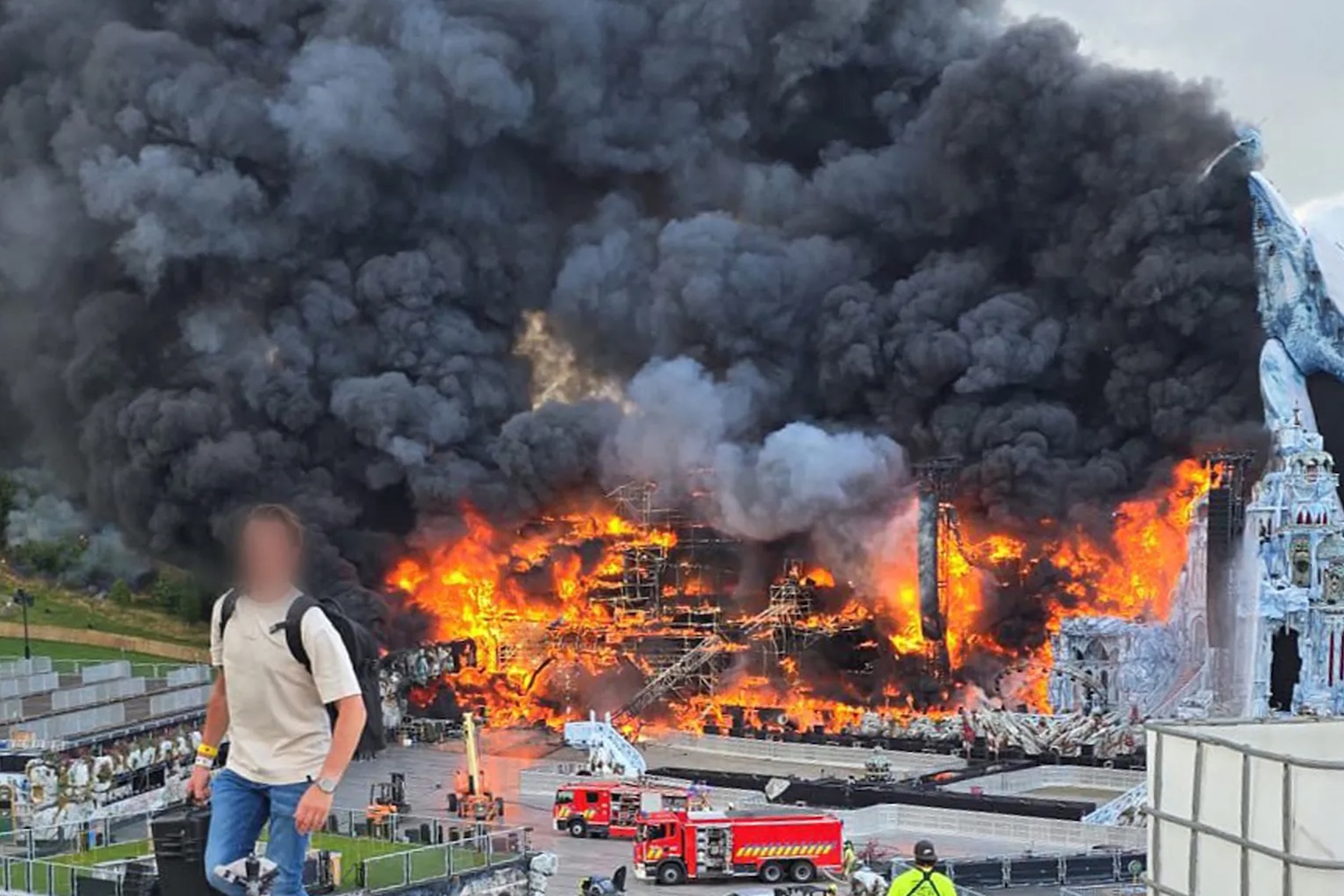
The summer of 2025 highlighted, more than ever, the critical importance of Health and Safety in the live events industry.
On 16 July 2025, a fire broke out on the main stage at Tomorrowland in Boom, Belgium—one of the world’s largest music festivals, attracting more than 400,000 visitors. Although the cause of the incident remains under investigation, it immediately drew international attention and demonstrated how quickly the safety of thousands of people can be put at risk.
Just a few weeks later, on 30 August 2025, in Ioannina, Greece, the collapse of a roof support structure in Mavili Square, caused by extreme wind gusts, exposed both event organisers and production crews to significant safety risks. In response, labour unions and entertainment industry federations called on the Labour Inspectorate to strengthen the enforcement of preventive measures and improve health and safety standards across the live events sector.
These incidents should not be viewed as isolated events. They highlight three important realities:
- the necessity of developing event-specific Health and Safety Plans (HSPs) rather than relying on generic procedures;
- the need to place people—both workers and audiences—at the centre of every safety decision;
- and the importance of adapting event planning to the challenges posed by climate change while recognising the risks associated with human error.
In Cyprus, the legal framework governing health and safety at events is still largely based on construction site legislation. However, the operational reality of festivals, concerts, and public events extends far beyond a construction environment. Temporary structures, production crews, special effects, electrical installations, crowd management, and changing weather conditions all create additional risks that require specialised planning and expertise.
Perhaps the time has come to ask a more fundamental question:
How can we build a genuine culture of safety that protects both people and the experiences we create?
The HRDA-certified training programme “Health and Safety in Events,” delivered by Maria Kyriakou, bridges the gap between legislation and practical implementation.
Participants will learn to:
- understand the current legal and regulatory framework governing health and safety;
- examine how legislation applies specifically to live events, festivals, concerts, and productions;
- design practical, event-specific Health and Safety Plans (H&S) tailored to the unique requirements of each event.
Our goal is to ensure that Health and Safety is no longer viewed as a regulatory obligation, but as a strategic management tool that protects everyone involved—from employees, contractors, and artists to audiences and the wider community.